Today, marketing is about creating a smooth, connected customer experience across different points of contact. Many brands struggle to tell the difference between multi-channel and omnichannel, which can lead to scattered efforts and missed chances.
In this blog post, we’ll break down the differences, pros, and cons of each approach, along with how to get started. We’ll also share stats, answer common questions, and give you tips you can use now.
What Do These Terms Mean?
Multi-Channel Marketing
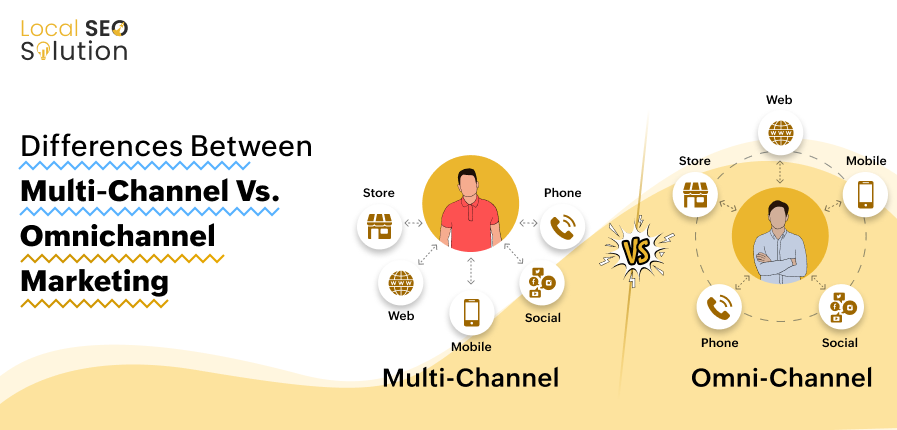
Multi-channel marketing means reaching customers on various channels like email, social media, search engines, ads, physical stores, and websites. Each channel has its own goals, budget, and messaging. The point is to reach as many people as possible, no matter if the channels work together.
- Key things to know:
- Different channels used
- Each channel has its own purpose
- Reaching people across channels without always sharing info
- Some channels work together, usually for specific campaigns
Omnichannel Marketing
Omnichannel marketing focuses on the customer, aiming to give a smooth, consistent experience across all channels. All channels work together to help the customer. The goal is to connect everything, share data, and have one clear view of the customer.
- Key things to know:
- One smooth experience for the customer
- Consistent messages and branding
- Shared data allows for personal touches
- Systems (like CRM and e-commerce platforms) work together
Omnichannel isn’t just about channels; it’s about the customer’s experience.
Primary Differences: Multi-Channel vs. Omnichannel
1) Customer Experience
- Multi-Channel: Customers see your brand in different places, but it might not feel connected. Someone might see a product on Instagram, search for it on Google, and then get a general email, without any connection between them.
- Omnichannel: The customer experience is smooth. Someone looking at a product on their phone can continue on their computer with the same cart, personal suggestions, and consistent messages. Info is shared to help guide the customer.
2) Data and Personalization
- Multi-Channel: Data is often stored separately for each channel. Personal touches can happen within a channel, but don’t use information from other channels.
- Omnichannel: Data is shared (often using a Customer Data Platform, or CRM). Personal touches are based on what the customer did in other channels.
3) Messaging and Branding
- Multi-Channel: Branding is consistent, but messages can be different on each channel. Campaigns might feel disconnected.
- Omnichannel: One story is told across all channels. The message, tone, and offers all support the same customer experience.
4) Technology and Infrastructure
- Multi-Channel: Needs different tools for each channel (email, social media ads, in-store tech). Channels working together is helpful, but not required.
- Omnichannel: Needs platforms that work together: CRM, e-commerce, and sometimes AI. This costs more to set up, but gives better information and a smoother experience.
5) Measurement
- Multi-Channel: Success is often measured by looking at the first or last touchpoint. It can be hard to compare how each channel is doing.
- Omnichannel: Tries to track the whole customer experience across channels. This allows for better calculations of ROI.
6) ROI
- Multi-Channel: Can reach a lot of people and create quick sales. But it can be inefficient because of overlapping audiences and inconsistent messages.
- Omnichannel: Can increase customer lifetime value and improve channel efficiency with better retention and customer information.
Why Omnichannel Is the Way to Go
- Customer Expectations: Today’s customers expect a smooth experience across devices and channels. If someone adds something to their cart on their phone, they expect to be able to check out on their computer.
- Economic Efficiency: While it costs more to get started, omnichannel strategies can cut waste by showing the right message at the right time.
- Data Maturity: Improvements in data sharing allow for better personalization.
- Competitive Differentiation: A smooth, personal experience can set you apart.
Important Numbers to Track
To see if you’re on the right track with omnichannel (or doing well with multi-channel), keep an eye on these:
- How consistent is the experience across channels?
- The percentage of customers who use multiple channels before buying.
- How complete are your customer profiles are.
- The average order value for customers who use multiple channels.
- How often do customers come back after their first purchase?
- How long does it take from first contact to sale?
- How much are you spending on marketing for each sale?
- How consistent engagement is across channels to make sure you’re using the right language for the right medium.
- How well are your personalized experiences working?
- How long does it take to update a customer profile?
“Good omnichannel is less about how many channels you have and more about how well they connect.” — SEO expert
How to Make It Happen
Moving from multi-channel to omnichannel is a process, not a one-time thing. Here’s a step-by-step plan:
Phase 1: Set the Stage
- Check your current channels: map out every point of contact, message, and data source.
- Decide what data to combine.
- Set goals: decide what you want to achieve, like better sales or higher order values.
- Assign a team: have a group responsible for data quality, privacy, and working together.
Phase 2: Build Your System
- Choose a data platform that can combine customer information.
- Connect your core systems: e-commerce, email, loyalty program, recommendations, and in-store tech.
- Match customer identities: find ways to match different devices and sessions to one customer.
- Clean your data: remove duplicates.
Phase 3: Personalize
- Create a consistent brand story.
- Use customer data to personalize offers and content.
- Test different approaches to see what works.
- Keep a central library of content.
Phase 4: Measure
- Choose a way to track customer journeys across channels.
- Create dashboards that show how channels are performing together.
- Improve based on your data.
Phase 5: Get Better
- Use AI for personal touches and content recommendations.
- Follow privacy rules.
- Add more channels and offline features.
Additional Read: AI SEO: The Rise of AI Search Overviews
Answering Common Questions
Here are some frequently asked questions:
- What’s the difference between multi-channel and omnichannel marketing?
Multi-channel uses channels separately, while omnichannel connects them for a smooth experience. - Why is omnichannel marketing better?
It combines data, personalizes, and makes things easier for customers, leading to better sales and retention. - What are the key parts of an omnichannel strategy?
A platform that combines data, integrated e-commerce, consistent messages, and personalization. - How do you measure success?
Track the customer journey across channels. - What are common challenges?
Data being stored separately, complex integrations, privacy, old systems, and needing teams to work together. - What is a customer view and why does it matter?
It’s a complete profile of a person’s interactions across channels, which allows for accurate personalization. - How long does it take to get started?
It can take time to create a seamless experience. - What numbers show success?
Conversion rate, customer lifetime value, order value, and repeat purchases. - Who benefits from omnichannel marketing?
Retail, e-commerce, and any business with customer touchpoints. - How does AI help?
AI enables personalization, predictions, and content recommendations.