In today’s ultra-competitive digital world, SEO is not just about best practices like keyword stuffing or building backlinks; SEO is about developing authority and trust and comprehensive topical representation of your niche.
This will help you differentiate yourself from competitors—topical relevance—and therefore potential customers. This great SEO tactic turns visitors into visitors, and ultimately, visitors into customers.
What is Topical Relevance?
Topical relevance is the breadth of coverage of your website’s content on a particular topic or theme; this coverage establishes your website as an expert in that topic. With topical relevance, we convert targeting singular keywords to building topical relevance around a topic with support from multiple related relevant sources.
“Google is getting much more sophisticated in understanding relationships between related topics, and deep topical relevance can be an important factor in determining page and site relevance.” — John Mueller, Google Search Advocate.
Why Create Topic Relevance?
1. Search engines will reward you with better rankings
Google’s algorithm rewards pages/websites that are proven to be experts and trustworthy. Pages that demonstrate wide coverage of related subtopics show Google that the website is a trustworthy source. HubSpot says 81% of consumers research online prior to making a purchase, and that they prefer sources that show depth and trust.
Long-form content (2000+ words) that thoroughly covers a topic is two to three times as likely to rank in the top 10 results (Moz).
2. Improved User Trust and Engagement
Users generally trust and spend more time on websites with substantial, well-organized content. Research shows that web pages with in-depth content generally enjoy longer visit durations and lower bounce rates.
3. More Backlinks and Domain Authority
Comprehensive topical pages attract backlinks by nature, once again because websites are likely to cite from authoritative sources. Research from Moz indicates that most web pages ranking in the top three positions on search engine results pages cover at least 10 related subtopics.
4. Higher Conversion Rates
Trust is linked directly to conversion. According to Nielsen, 92% of consumers trust recommendations from others over brands, which is a great reminder of how important it is to build authoritative content.
How to Build Topical Relevance: Step-by-Step
1. Thorough Topic Exploration
Use keyword tools like SEMrush, Ahrefs, or Google Keyword Planner to discover your core keyword and related long-tail keywords. Make sure that you know what your audience is asking about your niche.
2. Create A Content Cluster
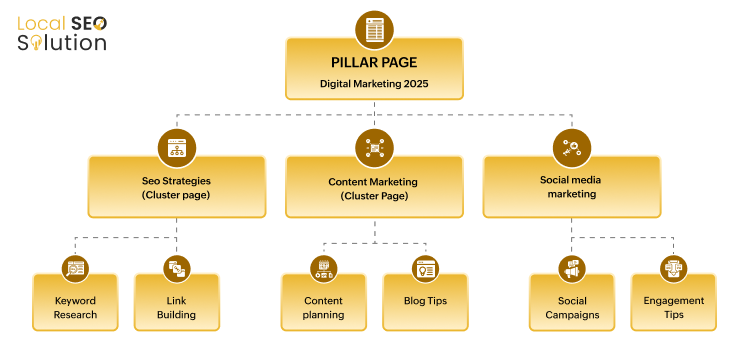
There are many ways to structure your content. I have found that often creating a pillar page on the main topic with multiple cluster content pages on specific subtopics tends to create the best context trail for user understanding and search engine crawling. For example:
Pillar Page: Digital Marketing
Clusters: SEO strategies, Content marketing pointers, Social media marketing, Email marketing approaches
This type of internal linking structure provides topical authority to the subject matter and offers contextual flows through your expertise.
3. Implement Semantic SEO
There’s still a dispute among industry experts on whether or not search engines use semantic, LSI or related phrases or entity-based phrases in their algorithms for SEO. Using LSI associated keywords and phrases will provide content for search engines and give context for readers. The more searches that resonate with your page’s theme, the better.
4. Optimize your Internal Linking
Be sure that your pages are internally linked together and that they reinforce your topical relevance when linking. This will help search engines crawl your website for relevance to topics. The more evidence you can provide search engine spiders concerning a valid topical relevance, the more likely you are to gain higher visibility online.
5. Endless Updates and New Content
You need to stay on top of industry changes, regularly update previously written pages, and add new topics to account for the constant changes in your niche.
6. Use Schema
Add structured data (schema) to the proper pages. This will enhance Google’s search results with rich snippets, resulting in an improvement in your click-through rate and demonstrating to Google that you are an authority.
7. Build Backlinks
You should really reach out for backlinks from websites in your niche that would be considered reputable. The best way to do this is to produce valuable, in-depth content that people would want to link to.
How to Build a Pillar Page and Cluster Pages: A Step-by-Step Walkthrough with Examples?
What Are Pillar Pages and Cluster Pages?
Pillar Page: A long and heavy-weight page that broadly covers a major topic. It acts as the “main hub” for a subtopic and is linked to the pillar page. It gives an overview and links out to cluster content that goes into the details.
Cluster Pages: Smaller pieces of content tightly focused on one subtopic related to the pillar. They, in turn, link back to Pillar pages, thus establishing a cluster that Google considers very authoritative.
Websites employing content clusters see a traffic increase of about 40% in organic traffic (Ahrefs).
Why Are Pillar and Cluster Pages Important?
- Improvement of SEO: Increase topical relevance and authority.
- Better User Experience: Gives some authority to content logic.
- Internal Linking: Link equity distribution and helps search engines understand your site’s structure.
Developing a Pillar and Cluster Content Strategy
Step 1: Select Your Core Topic (Pillar)
Choose a broad, high-traffic keyword relevant to your niche that will serve as the foundational topic on which you can cluster other keywords. It’s a topic your audience truly cares about.
Example of Core Topic (Pillar): Digital Marketing
Step 2: Carry out Keyword Research for the Subtopics
These keywords must contain long-tail and question keywords that your audience wants to know. You may have used a keyword tool such as Ahrefs, SEMrush, or the Google Keyword Planner.
Example Subtopics for “Digital Marketing”:
- SEO Strategies
- Content Marketing Tips
- Social Media Marketing
- Email Marketing Techniques
- Influencer Marketing
Step 3: Build Your Pillar Page
Develop a full-fledged authoritative page that will introduce your core topic and link back to all the cluster pages.
- Content Structure for the Pillar Page:
- Introduction to the core topic
- Overview of main subtopics
- Linking to each cluster page with a brief description
- A compelling conclusion with a call to action
Step 4: Create the Cluster Pages
Write separate pages dedicated to one subtopic. Each cluster page should be informative, and detailed, and have proper structure and keyword optimization.
Link Strategy:
- Each cluster page should link back to the pillar page.
- Link relevant cluster pages to each other for interlinking.
Step 5 – Internal linking
Link the pillar page to each cluster page and link each cluster page to the pillar page. You should also use descriptive anchor text such as:
“Learn more about SEO strategies”
“Dive deeper for content marketing tips”
This is good for topical relevance and helps crawlability.
| Pillar Page: Digital Marketing | Cluster Pages: |
| Covers broad overview | Deep dive into SEO Strategies, Content Marketing, Social Media, etc. |
| Links to all relevant subtopics | Link back to pillar page, link to other cluster pages |
| Content includes links to clusters | Focused, detailed content for each subtopic |
Content That Works in Topical Relevance Engineering
If you want to do well with Relevance Engineering, some types of content really stand out since they get people involved and are super relevant:
- Detailed Articles and Long Reads: These are well-researched articles giving real value.
- Interactive Stuff: Quizzes, calculators, and other tools let people get involved and see results made just for them.
- Videos and Visuals: Videos, infographics, and animations quickly explain things.
- Natural Conversations: FAQs and chatbots feel natural.
- Real User Content and Reviews: These build trust.
To make it work, make sure your content fits what people want, put it in different formats, make it work on all devices, and always match what people are trying to do.
Why AI Needs a New Way of Thinking About SEO
AI search engines are changing things by getting language and what people want better than ever. Keywords don’t matter that much compared to meanings of searches.
Here’s a new SEO focus:
- Get What People Want: Create content fitting certain needs, questions, and what people are feeling.
- Personalize: use AI to give results based on user info.
- Semantic Search: Use normal language.
- Good Trumps Quantity: Helpful content is key.
Basically, AI search needs SEO that changes with the times with what people mean, giving real relevance, not just keywords.
What You Should Avoid
To do well with Relevance Engineering, here are some old things you should quit:
- Quit stuffing your writing with extra keywords.
- Avoid boring content. Keep it fresh and update it to what users want now.
- Don’t blow off user experience: If your page loads slow, looks bad, or is hard to use, people won’t stick around.
- Stop ignoring what people want: Know what your audience seeks.
- Stop looking only at backlinks: Look at how long people stay on your page.
- Avoid a one-size-fits-all: Personalize your content.
Drop those old things, and your SEO will line up with new AI search.
Final Thoughts for Success
- Consistency: Regularly revise your pillar and cluster components in a timely fashion.
- Quality: Make sure you offer substantive, valuable information.
- Experience: Make navigation easy for the user, with clear links to follow.
- Optimization: Use relevant keywords naturally, along with structured data.
Answering People Also Ask (PAA) Questions for SEO
PAA Questions and Answering PAA Questions for SEO
If you answer People Also Ask (PAA) questions it will give you a better chance of appearing in the answer box that Google provides. Here are some common PAA questions on topical relevance and topical authority, and a more optimized answer.
1. What is the importance of topical relevance for SEO?
Topical relevance is important because it lets search engines know that your website is an authority on a specific subject. This leads to higher rankings, increased trust from users, and more backlinks, which means larger, sustainable organic traffic.
2. How do I build topical authority for my website?
The best thing you can do is a well-created content strategy that includes a pillar page with related cluster content, well-optimized internal links, semantic keywords, and frequent updates. If you can also do some outreach to get backlinks, this raises your authority level even more.
3. Why does Google want topical content?
Google’s goal is to serve users with the most relevant and authoritative information. At the same time, Google wants to determine the expertise of each piece of content. The more complete your content is, the more likely experts and users will deem your content to be complete, which is more in line with Google’s approach to E-A-T (Expertise, Authority, Trustworthiness), therefore, providing better chances of ranking well.
4. Can I increase my website’s SEO by purely producing more content?
Yes, but it is more important to focus on quality content and topical relevance. In-depth content organized around a particular niche makes an authority statement and helps increase rankings and trust.
5. How does internal linking increase topical relevance?
Internal links connect related pages to show search engines the themed structure of your site. Internal links build the authority of individual pages and keep users on your website longer.
Building topical relevance is now imperative and not just a nice way of doing SEO. It is a deliberate strategy involving the creation of a web of authoritative and interconnected content that thoroughly attempts to answer your audience’s questions. This helps improve your Google rankings and build trust with your audience, turning visitors into repeat brand advocates.